
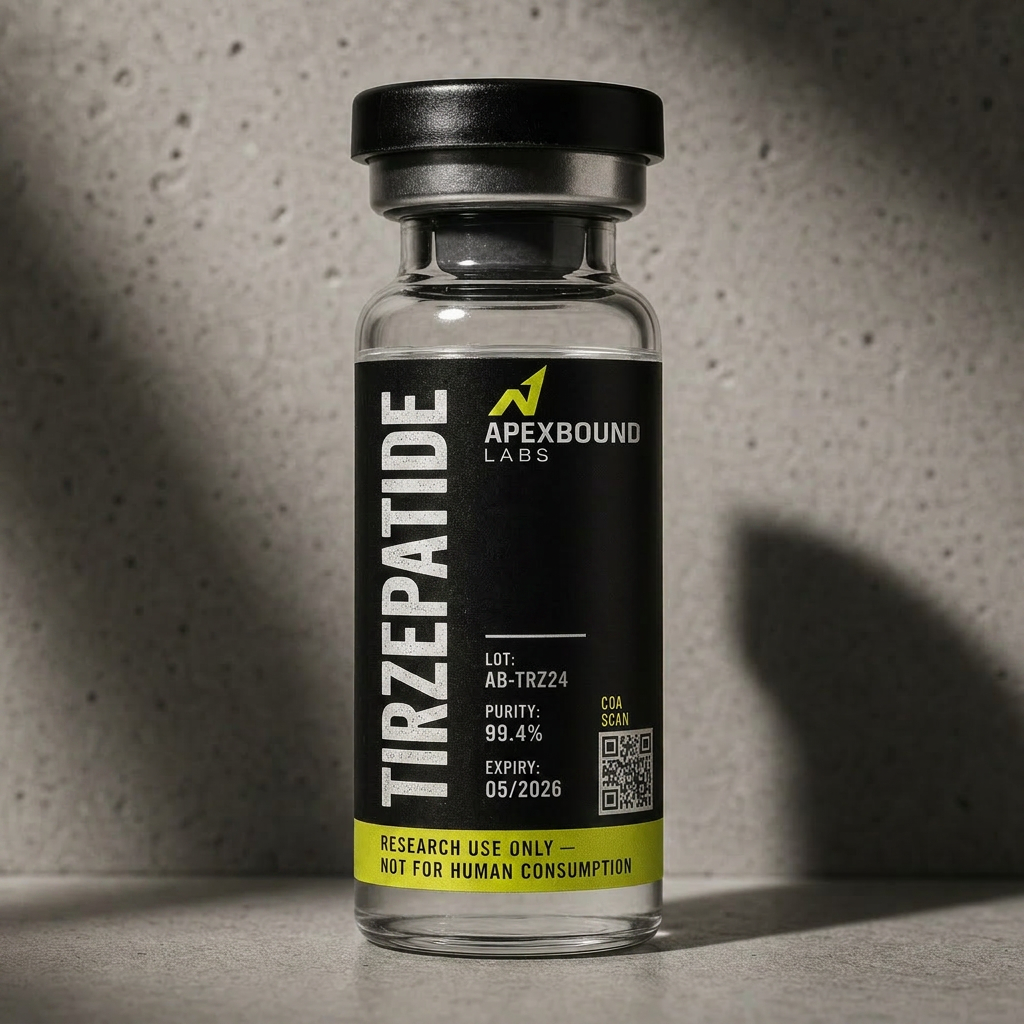
Tirzepatide
LY3298176; dual GIP/GLP-1 receptor agonist; "twincretin"
Tirzepatide (LY3298176) is a synthetic 39-amino-acid linear peptide engineered as a dual agonist of the glucose-dependent insulinotropic polypeptide receptor (GIPR) and the glucagon-like peptide-1 receptor (GLP-1R), the two principal incretin receptors involved in carbohydrate and energy metabolism. A C20 fatty-diacid moiety enables albumin binding and extends its half-life, supporting once-weekly dosing in research settings. The published body of research spans receptor pharmacology (in vitro signaling and binding assays characterizing biased and imbalanced agonism), structural biology (cryo-EM of the peptide bound to each receptor), rodent metabolic models examining food intake, macronutrient preference, body weight and glucose handling, and human clinical trials in type 2 diabetes and obesity research cohorts. Investigations have examined how concurrent GIPR and GLP-1R engagement modulates insulin secretion, glucagon dynamics, gastric emptying and appetite-related circuits, and how tirzepatide's signaling profile differs from native incretins and from selective GLP-1R agonists such as semaglutide. Research has been conducted in transfected cell lines, receptor-knockout mice, diet-induced obesity models, and randomized controlled trials, making it a widely studied reference compound for incretin pharmacology.
Tirzepatide simultaneously activates GIP and GLP-1 receptors; at the GLP-1R it has been characterized as a biased agonist favoring cAMP signaling over beta-arrestin recruitment and receptor internalization, while engaging GIPR with affinity comparable to native GIP. In model systems this dual incretin signaling is associated with enhanced glucose-dependent insulin secretion, altered glucagon dynamics, slowed gastric emptying, and reduced food intake.
Note · Single peptide entity (not a blend). Characterized in the literature as an "imbalanced" dual agonist with relatively greater GIPR engagement; research framing only, no therapeutic or product claims for any supplier product.
Using in vitro receptor pharmacology assays, this study characterized tirzepatide as engaging GIPR with affinity comparable to native GIP while acting as a biased agonist at GLP-1R, favoring cAMP generation over beta-arrestin recruitment and showing weaker receptor internalization than GLP-1.
Cryo-electron microscopy structures of tirzepatide bound to GIPR and GLP-1R were resolved to examine the molecular contacts underlying its dual incretin receptor engagement and to explain the structural basis of its differential receptor interactions.
In mouse and rat feeding models, tirzepatide was associated with reduced total caloric intake and a selective reduction in preference for high-fat (lipid) food over carbohydrate, examined alongside selective GLP-1R agonists to probe the contribution of incretin signaling to macronutrient choice.
In this randomized controlled trial (SURPASS-2), tirzepatide was studied head-to-head against the selective GLP-1R agonist semaglutide, with researchers measuring differences in glycemic markers and body-weight change across the dual-agonist dose range in a type 2 diabetes research cohort.
Citations are provided for scientific reference and educational context only. They describe published laboratory and clinical research and do not constitute medical advice, dosing guidance, or any claim about an Apexbound Labs product. All products are sold strictly for in-vitro laboratory and research use.