
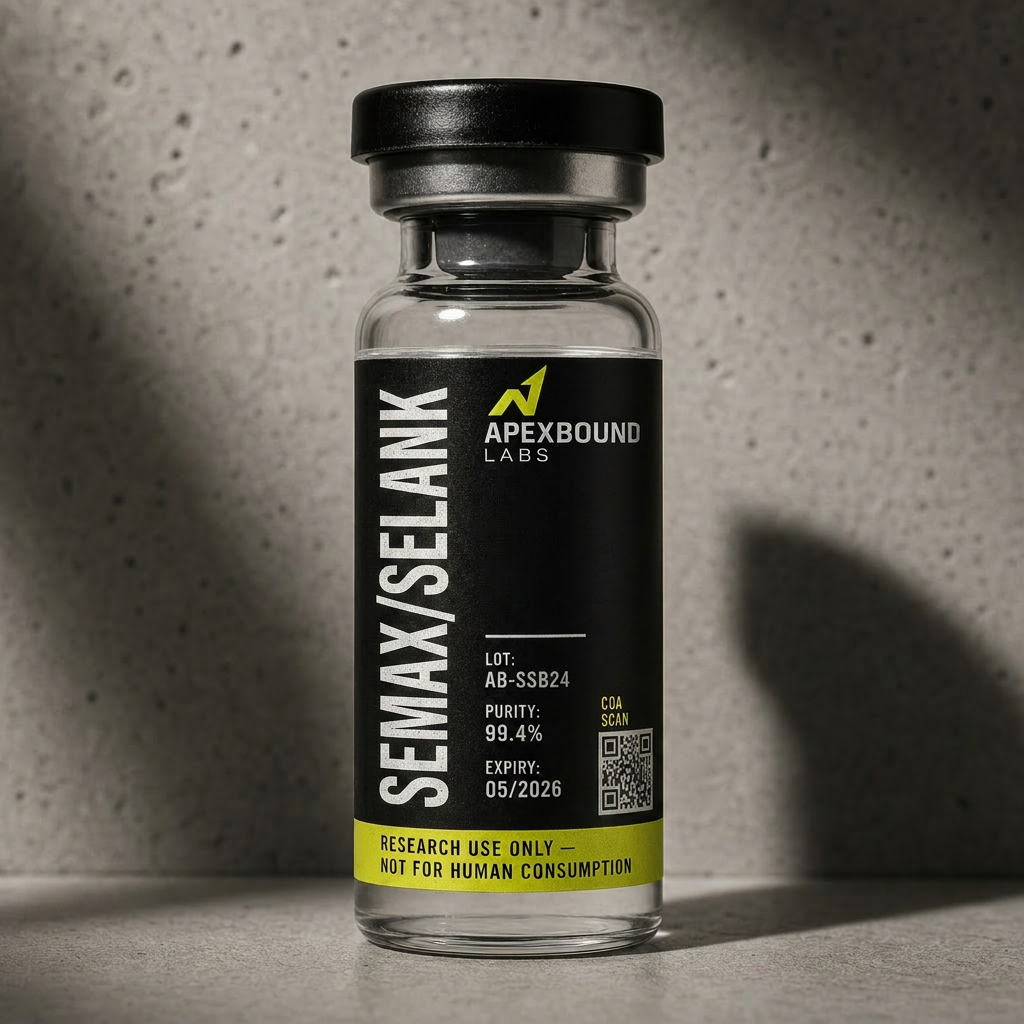
Semax / Selank Blend
Semax + Selank combination; ACTH(4-10) analog (Semax) + tuftsin analog (Selank); heptapeptide nootropic/anxiolytic blend
The Semax / Selank blend combines two synthetic regulatory peptides that have been studied independently in Russian preclinical and clinical literature. Semax is a heptapeptide analog of the ACTH(4-10) fragment (Met-Glu-His-Phe-Pro-Gly-Pro) that lacks the parent hormone's corticotropic activity; it has been investigated as a nootropic and neuroprotective agent, with research in rodent models examining its influence on neurotrophin systems, particularly brain-derived neurotrophic factor (BDNF) and nerve growth factor (NGF) gene and protein expression in the hippocampus, frontal cortex, and retina, and in models of cerebral ischemia. Selank is a heptapeptide analog of the immunomodulatory tetrapeptide tuftsin, extended with Pro-Gly-Pro for metabolic stability; it has been studied as an anxiolytic, with research examining its effects on GABAergic neurotransmission gene expression, enkephalin-related signaling, and behavioral measures of anxiety in rodents, alongside clinical investigations in anxiety disorders. Research domains for the two components span neurotrophin signaling, GABAergic and monoaminergic neurotransmission, neuroprotection in ischemia models, and stress-related behavior. The blend itself has not been characterized as a single entity in peer-reviewed studies; the evidence base is drawn from the individual peptides.
In animal models Semax has been associated with upregulation of BDNF/NGF neurotrophin and receptor (trkB) expression in several brain regions, a proposed substrate for its reported neuroprotective and pro-cognitive effects. Selank has been studied as a modulator of GABAergic neurotransmission gene expression and enkephalin metabolism, proposed to underlie anxiolytic activity without direct benzodiazepine-receptor binding.
Note · This is a blend; no peer-reviewed studies were found on the combined Semax/Selank product itself. The citations below are research on the two named component peptides individually: Semax (an ACTH(4-10) analog) and Selank (a tuftsin analog). Findings are reported strictly as in vitro / animal-model / clinical-research observations and are not therapeutic claims for any supplier product.
In rats, Semax administration was associated with multidirectional, time-dependent changes in NGF and BDNF gene expression across the hippocampus, frontal cortex, and retina, characterizing its effect on neurotrophin transcription in vivo.
In a rodent model, the heptapeptide Semax was reported to increase BDNF expression across multiple brain regions, examined as a candidate mechanism for the peptide's neurotrophic actions.
In rat frontal cortex tissue, Selank altered mRNA levels of several genes involved in GABAergic neurotransmission, studied alongside GABA at 1 and 3 hours post-administration as a molecular correlate of its anxiolytic profile.
A clinical comparison examined the anxiolytic effect and tolerability of Selank versus the benzodiazepine phenazepam in patients with anxiety (phobic-anxiety and somatoform) disorders, assessing both efficacy measures and side-effect profiles.
Citations are provided for scientific reference and educational context only. They describe published laboratory and clinical research and do not constitute medical advice, dosing guidance, or any claim about an Apexbound Labs product. All products are sold strictly for in-vitro laboratory and research use.