
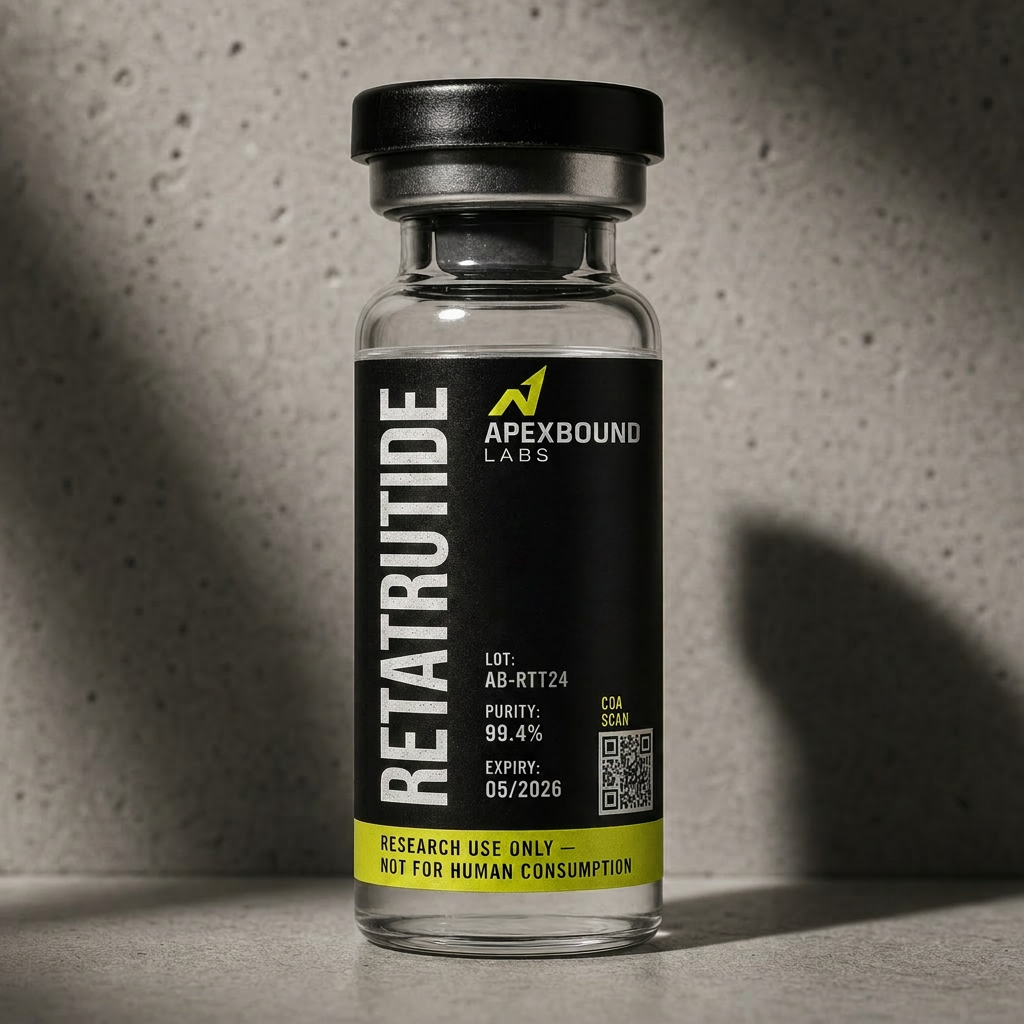
Retatrutide
LY3437943; triple GIP/GLP-1/glucagon receptor agonist; triagonist; "triple-G" agonist
Retatrutide (research designation LY3437943) is a synthetic, fatty-acid-acylated single-peptide investigational agent engineered to simultaneously activate three metabolic hormone receptors: the glucose-dependent insulinotropic polypeptide receptor (GIPR), the glucagon-like peptide-1 receptor (GLP-1R), and the glucagon receptor (GCGR). The peptide backbone is derived from GIP and modified to confer balanced "triagonist" activity and an extended half-life suitable for once-weekly subcutaneous administration in research settings. The published body of research spans receptor-pharmacology and rodent model characterization through randomized phase 2 clinical investigations. Reported research domains include energy homeostasis and body-weight regulation, glycemic parameters in type 2 diabetes models and cohorts, hepatic fat content in metabolic dysfunction-associated steatotic liver disease (MASLD), and obesity-associated cancer-progression models. Mechanistic studies attribute appetite and food-intake effects largely to GLP-1R and GIPR signaling, while GCGR activation has been associated in preclinical work with increased energy expenditure (reported to account for roughly 30-35% of body-weight reduction in mice). Retatrutide is studied for research purposes only; the references below describe what was investigated and observed in laboratory and clinical-research contexts.
Retatrutide is a unimolecular peptide that concurrently agonizes the GIP, GLP-1, and glucagon receptors. In model systems, combined incretin (GLP-1R/GIPR) signaling has been associated with reduced food intake while glucagon-receptor activation has been associated with increased energy expenditure.
Note · Not a blend; a single engineered triagonist peptide. Clinical-research references (Jastreboff, Rosenstock, Sanyal) are phase 2 randomized trials; Coskun et al. is the preclinical discovery/characterization paper using cell-based receptor assays and rodent models.
This discovery and characterization study used in vitro receptor assays and rodent models to demonstrate balanced triple agonism at GCGR, GIPR, and GLP-1R, reporting in preclinical work that glucagon-receptor activity contributed substantially to body-weight reduction via increased energy expenditure.
This 48-week randomized, double-blind, placebo-controlled phase 2 trial in adults with obesity investigated escalating once-weekly subcutaneous doses and observed dose-dependent reductions in body weight alongside changes in blood pressure, lipid, and glycemic parameters; gastrointestinal events were the most frequently reported adverse effects.
This phase 2 trial in a type 2 diabetes cohort examined retatrutide against placebo and an active comparator (dulaglutide), assessing changes in glycated hemoglobin and body weight across multiple doses over the study period.
In this phase 2a sub-study of participants with MASLD who were overweight or obese, MRI-measured hepatic fat content was assessed over 48 weeks; investigators reported large dose-dependent relative reductions in liver fat that correlated with body-weight change and insulin-sensitivity markers.
Citations are provided for scientific reference and educational context only. They describe published laboratory and clinical research and do not constitute medical advice, dosing guidance, or any claim about an Apexbound Labs product. All products are sold strictly for in-vitro laboratory and research use.