
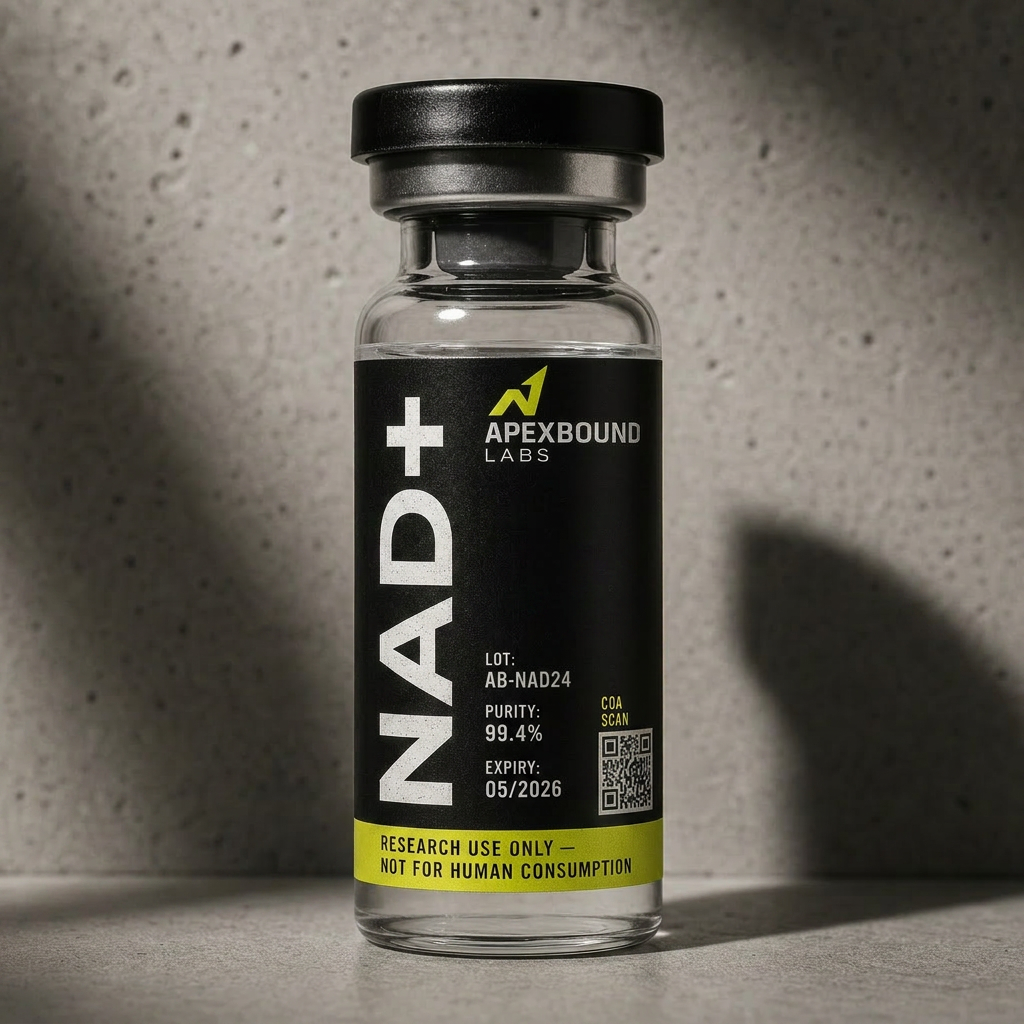
NAD+
NAD, nicotinamide adenine dinucleotide; reduced form NADH; precursors include NMN (nicotinamide mononucleotide) and NR (nicotinamide riboside)
Nicotinamide adenine dinucleotide (NAD+) is an essential coenzyme present in all living cells that functions as a central electron carrier in cellular redox reactions and as a substrate for NAD+-consuming enzymes including sirtuins, PARPs, and CD38. Research interest centers on the observation that tissue NAD+ concentrations decline with age and under metabolic and ischemic stress, which has been studied in relation to mitochondrial dysfunction and cellular senescence. The bulk of the experimental literature examines NAD+ biosynthetic precursors (nicotinamide mononucleotide, NMN, and nicotinamide riboside, NR) as a way to raise NAD+ availability, since NAD+ itself is poorly cell-permeable. In vitro work has investigated effects on the NAD+/Sirt3 axis in stem cells, while rodent studies have explored associations with metabolic, mitochondrial, and inflammatory outcomes. Randomized, placebo-controlled human research has examined the safety, tolerability, and pharmacokinetics of oral precursor supplementation and its capacity to elevate measured blood NAD+ metabolite concentrations. Reported research domains include aging biology, skeletal-muscle physiology, cardiometabolic function, and ischemia. This entry is provided for research reference only and makes no therapeutic claims.
NAD+ acts as a redox cofactor shuttling electrons in glycolysis, the TCA cycle, and oxidative phosphorylation, and serves as the consumed substrate for sirtuins, PARPs, and CD38. Research models propose that supplying biosynthetic precursors (NMN, NR) raises intracellular NAD+ pools, which has been studied in relation to sirtuin (e.g., Sirt3) activity and mitochondrial function.
Note · NAD+ itself is poorly cell-permeable, so most cited research investigates the NAD+ biosynthetic precursors NMN (nicotinamide mononucleotide) and NR (nicotinamide riboside) as means of raising NAD+ levels; findings below pertain to those precursor compounds and to NAD+ biology generally.
In a randomized, double-blind, placebo-controlled crossover trial in healthy middle-aged and older adults, oral nicotinamide riboside (a NAD+ precursor) was reported to be well tolerated and to elevate measured NAD+ metabolite levels.
In a placebo-controlled, randomized, double-blind parallel-group study, 250 mg/day of NMN administered to older men was associated with increased whole-blood NAD+ and NAD+ metabolite concentrations and with changes in measured muscle function parameters.
In an in vitro study of mesenchymal stem cells, NMN supplementation was associated with increased intracellular NAD+ and NAD+/NADH ratio, elevated Sirt3 expression, and improvements in markers of mitochondrial function and cellular senescence.
This review examines preclinical evidence that NAD+ levels decline during aging and ischemic conditions in association with nuclear and mitochondrial dysfunction, and discusses NAD+ precursor strategies investigated in those experimental models.
Citations are provided for scientific reference and educational context only. They describe published laboratory and clinical research and do not constitute medical advice, dosing guidance, or any claim about an Apexbound Labs product. All products are sold strictly for in-vitro laboratory and research use.