
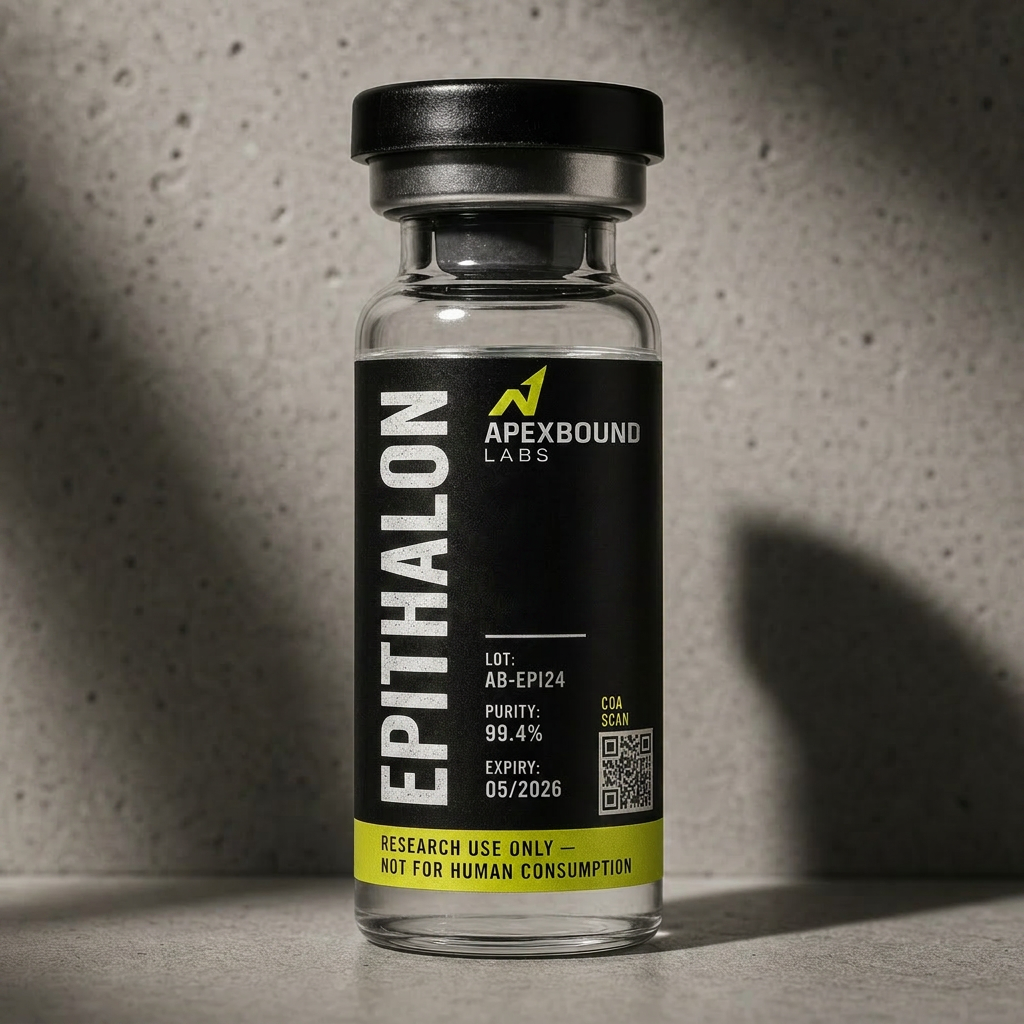
Epithalon
Epitalon, Epithalone, AEDG peptide, Ala-Glu-Asp-Gly tetrapeptide
Epithalon (Epitalon, AEDG) is a synthetic tetrapeptide, Ala-Glu-Asp-Gly, whose sequence was derived from the amino-acid composition of Epithalamin, a bovine pineal-gland extract. In the research literature it has been investigated primarily as a candidate geroprotective and neuroendocrine peptide using in vitro, in vivo (rodent and primate), and in silico model systems. A central research theme is its reported in vitro association with telomerase activity and telomere elongation in cultured human somatic cells. Other studies have examined its association with pineal melatonin-producing function and circadian rhythm in aging models, its antioxidant and antimutagenic properties, protection of cultured cells (including aged pineal cells and post-ovulatory mouse oocytes) from age-related oxidative damage, and proposed epigenetic regulation of gene expression during neuronal differentiation. A 2025 review summarized roughly 25 years of accumulated experimental data while noting that the precise mechanisms of action remain incompletely characterized and that much of the human-relevant evidence derives from small or single-center studies. The compound is studied as a research reference material; the literature is mechanistic and preclinical in emphasis.
In cell-culture research, Epithalon has been associated with induction of telomerase (TERT) expression and enzymatic activity, correlating with telomere lengthening in human somatic cells, and with antioxidant effects that reduce reactive-oxygen-species accumulation. Additional proposed mechanisms include epigenetic modulation via interaction with histone proteins and modulation of pineal melatonin-producing function in aging model systems.
Note · Single compound (not a blend). Epithalon is the synthetic AEDG tetrapeptide modeled on the natural pineal extract Epithalamin; several cited studies compare or reference both. Much of the cited evidence is in vitro or animal-model based; the 2025 IJMS paper is a review summarizing the broader literature.
In cultured human fetal fibroblasts, addition of the Epithalon peptide was associated with induction of telomerase gene expression and enzymatic activity, accompanied by telomere lengthening in the treated somatic cells.
This review synthesizes approximately 25 years of in vitro, in vivo, and in silico research on the AEDG tetrapeptide, summarizing reported geroprotective, antioxidant, and neuroendocrine effects while noting that its precise mechanisms of action remain incompletely understood.
In an in vitro mouse-oocyte model, Epitalon was associated with reduced reactive-oxygen-species accumulation, improved mitochondrial function, and delayed post-ovulatory age-related deterioration of the oocytes.
In human gingival mesenchymal stem cells, the AEDG tetrapeptide was associated with enhanced expression of neuronal differentiation markers, with binding interactions to histone proteins suggesting a possible epigenetic mechanism of gene regulation.
Citations are provided for scientific reference and educational context only. They describe published laboratory and clinical research and do not constitute medical advice, dosing guidance, or any claim about an Apexbound Labs product. All products are sold strictly for in-vitro laboratory and research use.